
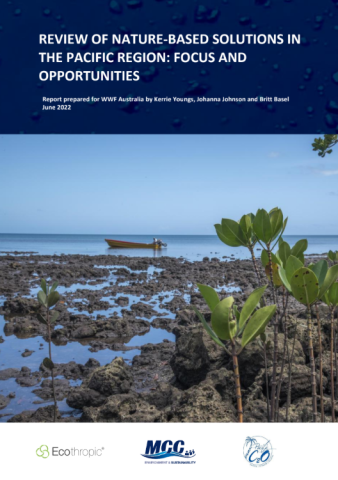
This report summarizes the findings of a review of Nature-Based Solutions (NbS) in the Pacific region, conducted by the Climate Resilient by Nature (CRXN) program in June 2022. The study identified 96 completed or ongoing NbS projects.
Key Challenges and Barriers:
Geographically Uneven Distribution: Projects are most concentrated in Melanesia, while the number of projects in Micronesia is significantly lower.
Donor Barriers: Strict conditions and short project cycles (3-5 years) are major barriers to community-based approaches that require longer timeframes.
Lack of Coordination: The lack of coordination mechanisms among donors, governments, and organizations leads to duplication, wasted resources, and "consultation fatigue."
Capacity limitations: The capacity of local governments and civil society organizations (CSOs) sometimes fails to meet the assessment requirements for accessing funding.
Factors leading to success and opportunities:
Successful projects often integrate traditional knowledge and community-based approaches from the design phase.
The application of IUCN global standards is considered a primary reference document.
There is an opportunity to enhance efficiency through the establishment of a regional knowledge center to share data and lessons learned.
Support for capacity building in Polynesia and Micronesia is needed, along with designing projects that are appropriate to the specific socio-cultural context of each locality, rather than applying a "one size fits all" approach.