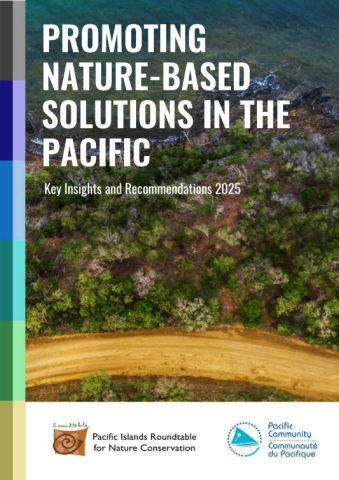
Key findings:
- Investment: Between 2022 and 2024, $93 million was mobilized for NbS projects across various sectors: maritime, coastal, forestry, agriculture, urban, and water resources.
- The nature of NbS: NbS is not just a new concept but also a legacy of indigenous knowledge and traditional practices of Pacific communities.
- Effectiveness: The integration of scientific knowledge with local knowledge (LEK) enhances ecological efficiency and promotes local self-reliance.
Key Recommendations:
- Policy & Design: Integrate NbS into national strategic plans, while designing flexible projects that respect the Pacific Way and indigenous knowledge systems.
- Finance: Shift from short-term financing cycles to long-term sustainable models. Encourage innovative financing mechanisms such as blended financing, blue bonds, and biodiversity credits.
- Capacity & Monitoring (M&E): Invest in training local human resources and applying technologies (GIS, AI, remote sensing) to support M&E work. The M&E framework should be based on community participation to ensure cultural and local relevance.
Approach: Prioritize a comprehensive approach from "ridge-to-reef," avoiding the separation of ecosystems and human activities.
In summary, building capacity from the community and fostering multilateral cooperation are key to realizing the potential of NbS, leading to a resilient future for the Pacific region.
Download