
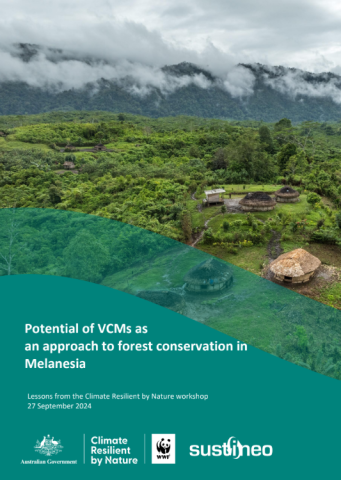
This document summarizes lessons learned from a workshop under the Climate Resilient by Nature initiative on using VCM as a new approach to forest conservation in Melanesia. Key points include:
- Scale and Management Issues: Small-scale VCM projects often have better community engagement potential, but current regulations are often more suited to larger projects. Regulations classifying projects (such as 'micro' and 'macro') are needed to reduce administrative costs and make small projects more feasible.
- Community Engagement: Community ownership is paramount. Project developers need to use appropriate tools and processes, leveraging traditional governance structures rather than relying solely on existing community characteristics.
- Benefits and Governance: Benefit sharing should focus on non-monetary values to mitigate social risks, manage expectations, and ensure sustainability. Benefit-sharing plans should be formalized before project verification.
- Ethical Financing: Grant funding should be prioritized over private investment to ensure social and environmental outcomes are paramount. Simultaneously, project developers need transparent carbon credit sales policies to prevent greenwashing.
- Capacity Building: Building capacity for communities and governments (especially at the sub-national level) is crucial to ensuring the success and sustainability of VCM projects.
- Looking Towards the Future: Continued exploration of alternative financing mechanisms for communities that are not eligible to participate in VCM is necessary, along with enhanced sharing of lessons learned among Pacific nations.
Download