
Objectives and Methodology
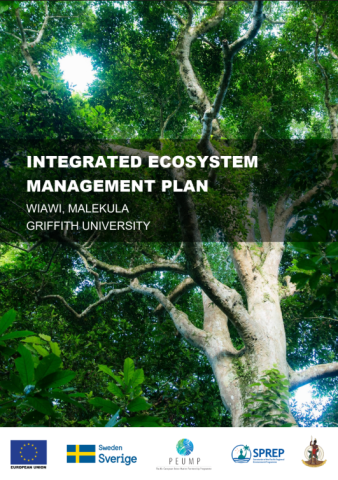
This document presents the Integrated Ecosystem Management Plan (IEMP) for the Wiawi region, Malekula, Vanuatu, aiming to establish a planning framework to identify ecosystem-based adaptation (EbA) options. This aims to enhance socio-economic and ecological resilience to the impacts of climate change and anthropogenic activities. The project employs a mixed methodology, combining Cost-Benefit Analysis (CBA) and Multi-Criteria Assessment (MCA) to rank EbA projects. Data were collected through household surveys and field surveys.
Challenges for Wiawi
Wiawi faces dual pressures from climate change and human impacts:
- Climate pressures: Rising temperatures, sea-level rise, ocean acidification, and the frequency of extreme weather events such as tropical cyclones.
- Local Challenges: Threatened food security, shortages of production tools, wild boar invasion, and issues related to water sanitation and waste management.
Adaptation Priority (EbA)
The assessment results ranked the highest priority projects for Wiawi as follows:
- Integrated forest and marine conservation program.
- Agricultural extension program including demonstration gardens and plant nurseries.
- Combining both programs.
- Implementation
For successful implementation, the plan emphasizes:
- Community participation: Ensuring comprehensive, meaningful, culturally respectful, and equitable participation for all members.
- Policy linkage: Alignment with Vanuatu's national goals for environmental management and sustainable development.
- Capacity building and monitoring: Investment is needed in technical training, support for local governance, and the establishment of mechanisms for monitoring and evaluating effectiveness periodically.