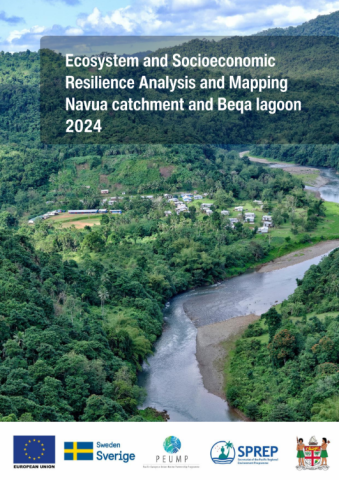
This report presents the Ecological and Socio-Economic Resilience Mapping and Analysis (ESRAM) 2024, carried out with the support of the PEUMP program (funded by the European Union and the Government of Sweden). The core objective is to develop an Integrated Ecosystem Management Plan (IEMP) to promote sustainable management, biodiversity conservation, and support adaptation to climate change in this region.
Methodology:
- Assessment: Identifying ecosystem services (providers, regulators, cultural, habitats) through consultations with 162 people in 53 communities in the region.
- Valuation: Using benefit-transitioning methods to estimate the economic value of terrestrial and marine ecosystems.
- Analysis: Assessing pressures, threats, and developing case studies on erosion, forestry, and fisheries to propose interventions.
Key Findings:
- Challenges: Logging, agricultural land conversion, overfishing, and invasive species are causing ecosystem degradation.
- Climate Change: Predicted rising temperatures, sea level rise, and extreme weather threaten infrastructure, public health (waterborne diseases), and livelihoods.
- Value: The region's ecosystems offer immense economic value, particularly coral reefs and mangrove forests.
Key Recommendations:
- Implement nature-based solutions, such as mangrove reforestation combined with breakwaters to combat erosion.
- Implement multi-species reforestation instead of monoculture mahogany to restore ecological balance.
- Strengthen the fisheries management framework, enhance law enforcement, and raise public awareness.
- Invest in water supply and waste management infrastructure at the basin level to ensure community resilience.
Download
Navua_Beqa_IEMP-ESRAM-report-BIEM-PEUMP
(PDF, 4.89 MB)