
Objectives and Context
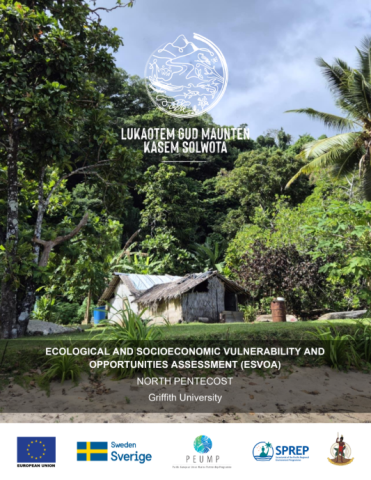
This report provides a planning basis for identifying Ecosystem-Based Adaptation (EbA) options to enhance the resilience of communities in North Pentecost to the impacts of climate change and anthropogenic activities. Rural communities in this region face persistent climate threats such as extreme weather events and sea-level rise, combined with population pressure and natural resource depletion.
Assessment Methodology
The research team used a hybrid methodology combining Cost-Benefit Analysis (CBA) and Multi-Criteria Assessment (MCA) to rank EbA projects according to priority. Data were collected from household surveys, field trips, and ecosystem service valuations.
Adaptation Priorities (EbA)
Based on the local context, top-priority EbA projects include:
- Agriculture: Focus on extension services, agroforestry models, poultry farming, and drought-tolerant crop varieties.
- Water Security: Prioritize rainwater harvesting through household and community storage tanks due to freshwater scarcity.
- Conservation: Invest in forest conservation and management of marine protected areas (MPAs) to maintain biodiversity and fisheries resources.
Implementation and Recommendations
Participation: Implementation needs to ensure inclusiveness and social equity (GEDSI), including women, youth, and persons with disabilities at all stages.
Collaboration: Coordination between government, communities, and international organizations is necessary.
Finance: Project feasibility depends on available funding; projects should be considered based on specific funding packages.
Orientation: Activities should be aligned with Vanuatu's National Sustainable Development Plan.