
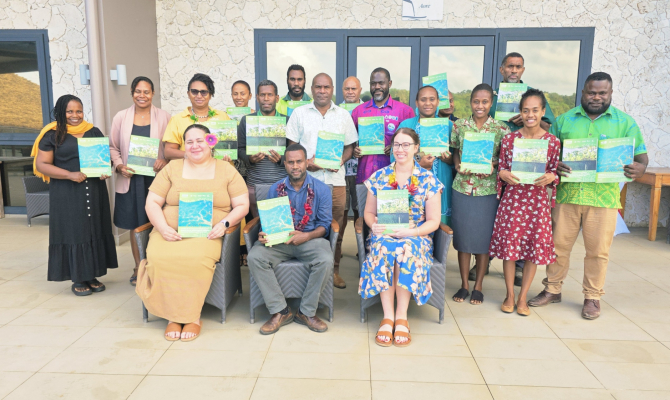
The Promoting Pacific Island Nature-based Solutions (PPIN) project, implemented by the Secretariat of the Pacific Regional Environment Programme (SPREP) in partnership with the Government of Vanuatu, has reached an important milestone with the official launch and handover of two key policy outputs designed to strengthen the integration of Nature-based Solutions (NbS) into the country's climate adaptation planning and decision-making processes.
Developed in close partnership with the Government of Vanuatu, the new resources mark a significant step forward in strengthening national efforts to build resilience to climate change while recognising the vital role that healthy ecosystems play in supporting communities, livelihoods, and sustainable development.
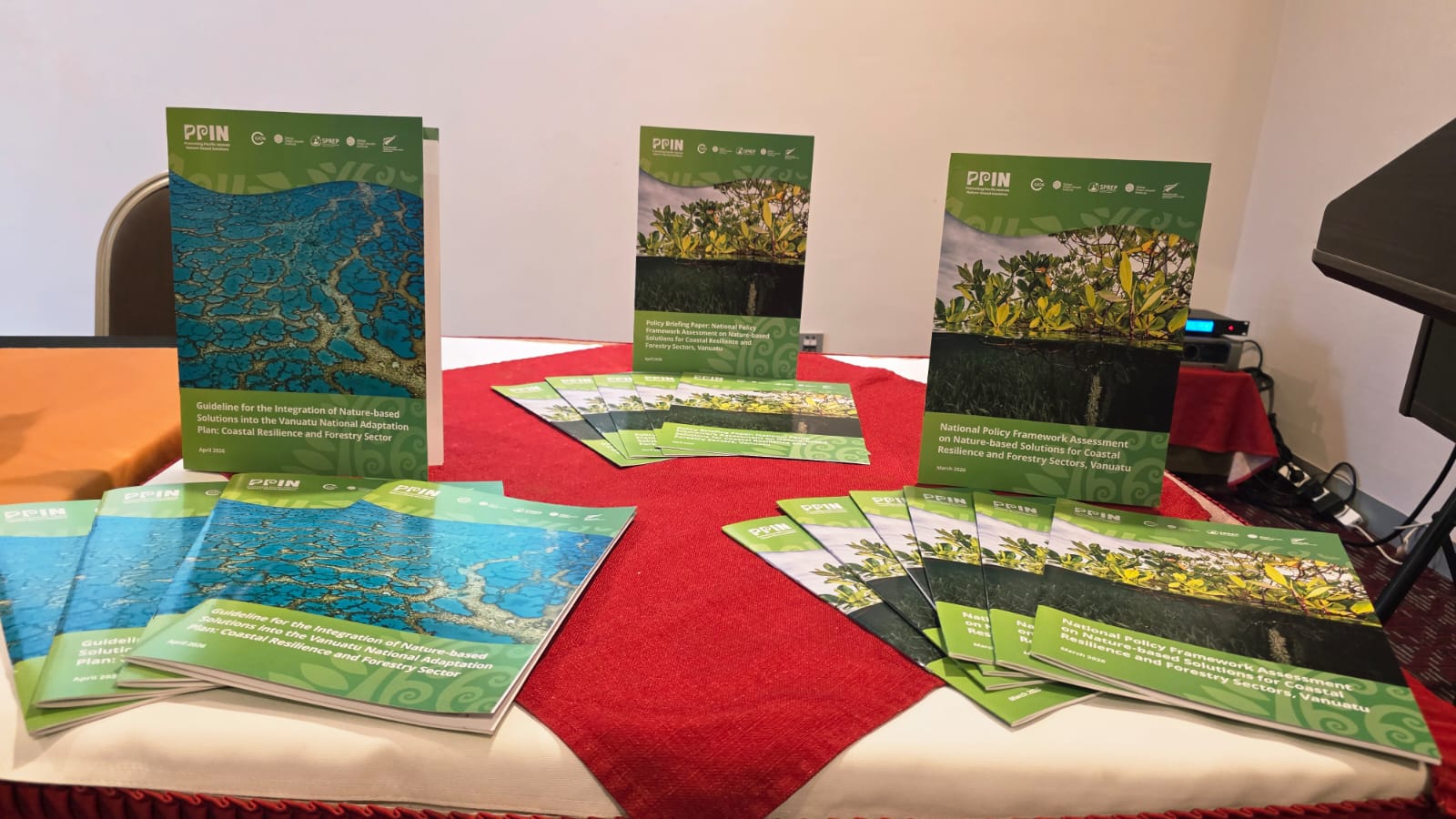
The three policy outputs formally handed over to the Government of Vanuatu during the special launch in Port Vila were:
• Guideline for Integrating Nature-based Solutions into Vanuatu's National Adaptation Plan
• National Policy Framework Assessment on Nature-based Solutions for Coastal Resilience and Forestry Sectors in Vanuatu
• Policy Briefing Paper for the National Policy Framework Assessment on Nature-based Solutions for Coastal Resilience and Forestry Sectors in Vanuatu.
Together, these resources provide both practical guidance for implementation and strategic recommendations for strengthening the integration of Nature-based Solutions across national policies, planning systems, and climate adaptation processes.
Director of the Vanuatu Department of Environmental Protection and Conservation, Mr. Osborne Melenamu, described healthy ecosystems as more than environmental assets.
“These reports recognise something that communities across Vanuatu have understood for generations that healthy ecosystems are fundamental to resilience, livelihoods, culture, and wellbeing,” said Mr. Melenamu.
He added, “Forests regulate water systems, reduce erosion, protect biodiversity, and support food security and livelihoods. Mangroves, reefs, seagrasses, and coastal ecosystems protect our shorelines, reduce wave energy, sustain fisheries, and strengthen resilience against storms and sea level rise.”
The importance of this connection between healthy ecosystems and community resilience is evident across Vanuatu. When cyclones strike, communities rely on more than emergency supplies and infrastructure to stay safe. Mangrove forests help absorb wave energy before it reaches villages.
Healthy coral reefs act as natural barriers against storm surges. Forests help stabilise soils, reduce erosion, and protect water sources during extreme weather events.
These ecosystems quietly protect lives, livelihoods, and economies every day. Recognising their value, Vanuatu is continuing to strengthen the role of nature within national climate adaptation and development planning.
Representative from New Zealand’s Ministry of Foreign Affairs and Trade and First Secretary at the New Zealand High Commission in Vanuatu, Ms Holly Peacock said, “Nature-positive solutions work because they are practical, proven, and rooted in place. They also build on something fundamental – generations of local knowledge and stewardship: our collective ‘kastom save’.”
She added, “Together we must embed these approaches into how we develop our infrastructure and industries, plan our settlements, and invest for the future. The policy tools we’re launching today represent an important step in doing exactly that.”
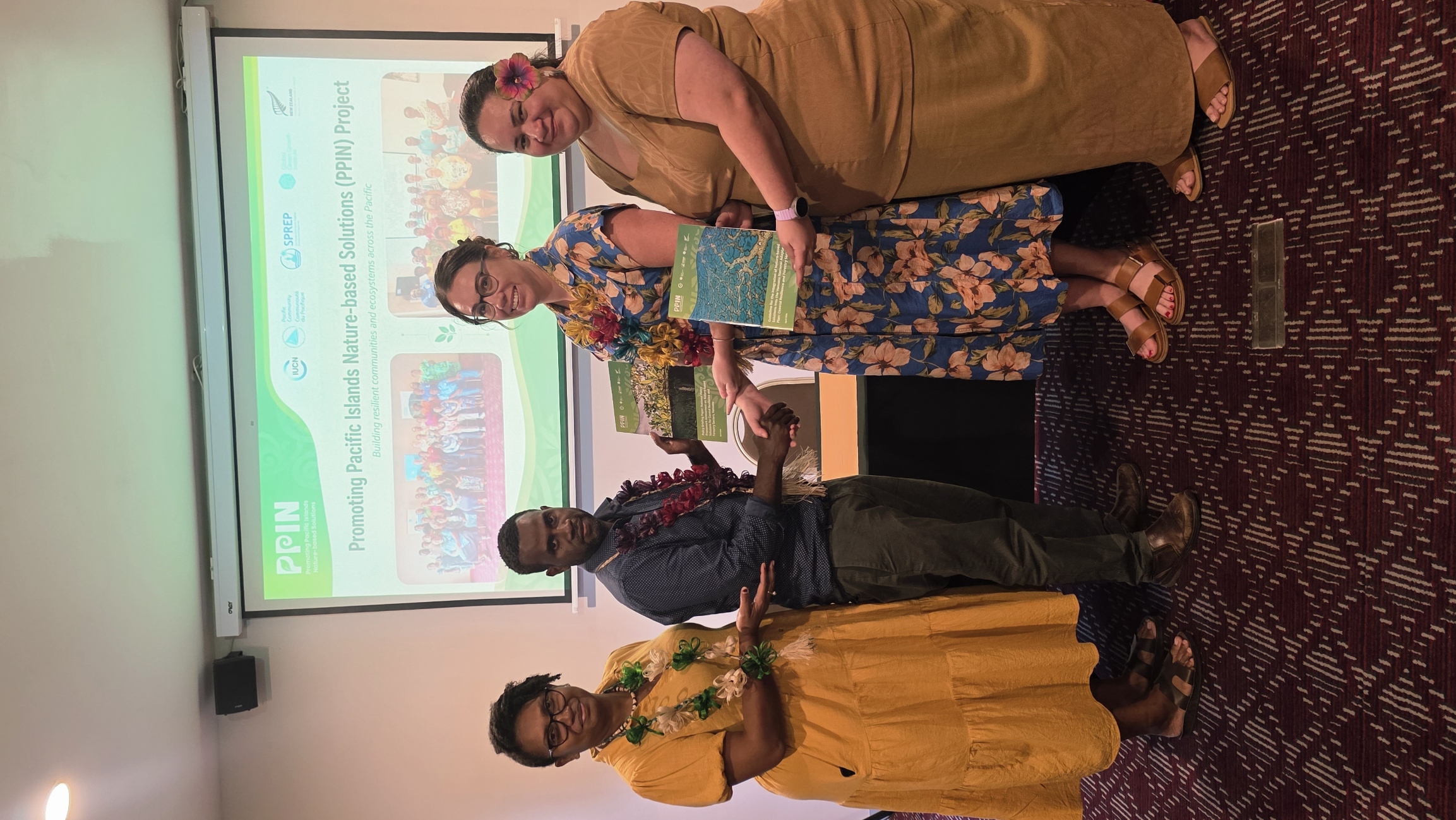
While the term Nature-based Solutions may be relatively new within policy discussions, the principles behind it are deeply familiar to many ni-Vanuatu communities. Traditional knowledge, customary management systems, and community stewardship have long played an important role in managing forests, coastal ecosystems, and natural resources across the country. The policy outputs developed under PPIN build on these existing strengths by providing practical guidance and strategic recommendations for integrating Nature-based Solutions into national adaptation planning and decision-making processes.
Speaking on behalf of SPREP, PPIN Project Coordinator Ms Utulei Lui acknowledged the leadership demonstrated by the Government of Vanuatu throughout the policy mainstreaming process and reaffirmed SPREP's commitment to supporting Pacific Island countries in advancing Nature-based Solutions.
“As the Pacific's regional environment organisation, SPREP is committed to supporting our Members to strengthen climate resilience, biodiversity conservation, and sustainable development through approaches that are grounded in both science and Pacific knowledge systems,” she said.
“Nature-based Solutions are now recognised across the Pacific as a practical and effective approach for addressing climate, biodiversity, and sustainable development challenges, and Vanuatu has demonstrated strong leadership in advancing this agenda through its commitment to integrating NbS into national planning and adaptation processes.”
Ms Lui also acknowledged the contributions of the Department of Environmental Protection and Conservation, the Department of Climate Change, the Department of Forestry, development partners, technical stakeholders, consultants, and community representatives who contributed throughout the PPIN process.
“The strength of these outputs reflects the collaborative efforts of many individuals and organisations who shared their expertise, experiences, and perspectives throughout this journey. SPREP sincerely thanks all partners and stakeholders who contributed to this work, and we look forward to continuing our partnership with Vanuatu as these policy tools move into implementation.”
The Promoting Pacific Island Nature-based Solutions (PPIN) project is funded by New Zealand’s Ministry of Foreign Affairs and Trade (MFAT). PPIN seeks to support the development of policy and legislation for Nature- based Solutions (NbS), build regional awareness and capacity, and strengthen regional cooperation amongst Pacific Island countries on NbS. PPIN is managed by IUCN in partnership with the Pacific Community (SPC), the Secretariat of the Pacific Regional Environment Programme (SPREP) and Global Green Growth Institute (GGGI).