
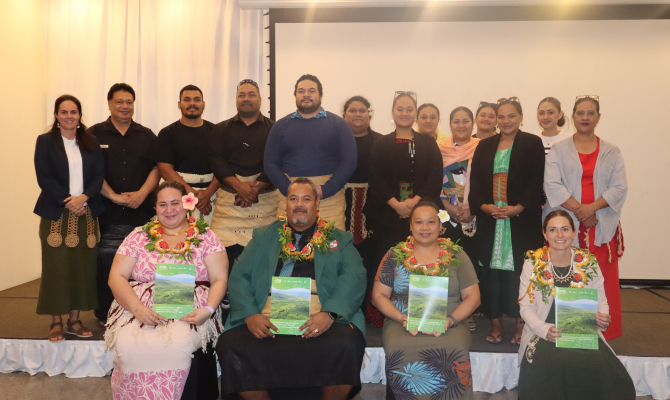
The Government of Tonga, in partnership with the Secretariat of the Pacific Regional Environment Programme (SPREP), are celebrating a significant milestone in Tonga’s journey to strengthen climate resilience through Nature-based Solutions (NbS).
Held at the Tanoa Dateline Hotel in Nuku’alofa, the “Strengthening Nature-based Solutions Policy Mainstreaming: Tonga Promoting Pacific Islands Nature-based Solutions (PPIN) Policy Launch and Handover Event” marked the receipt of three key policy outputs under the Project.
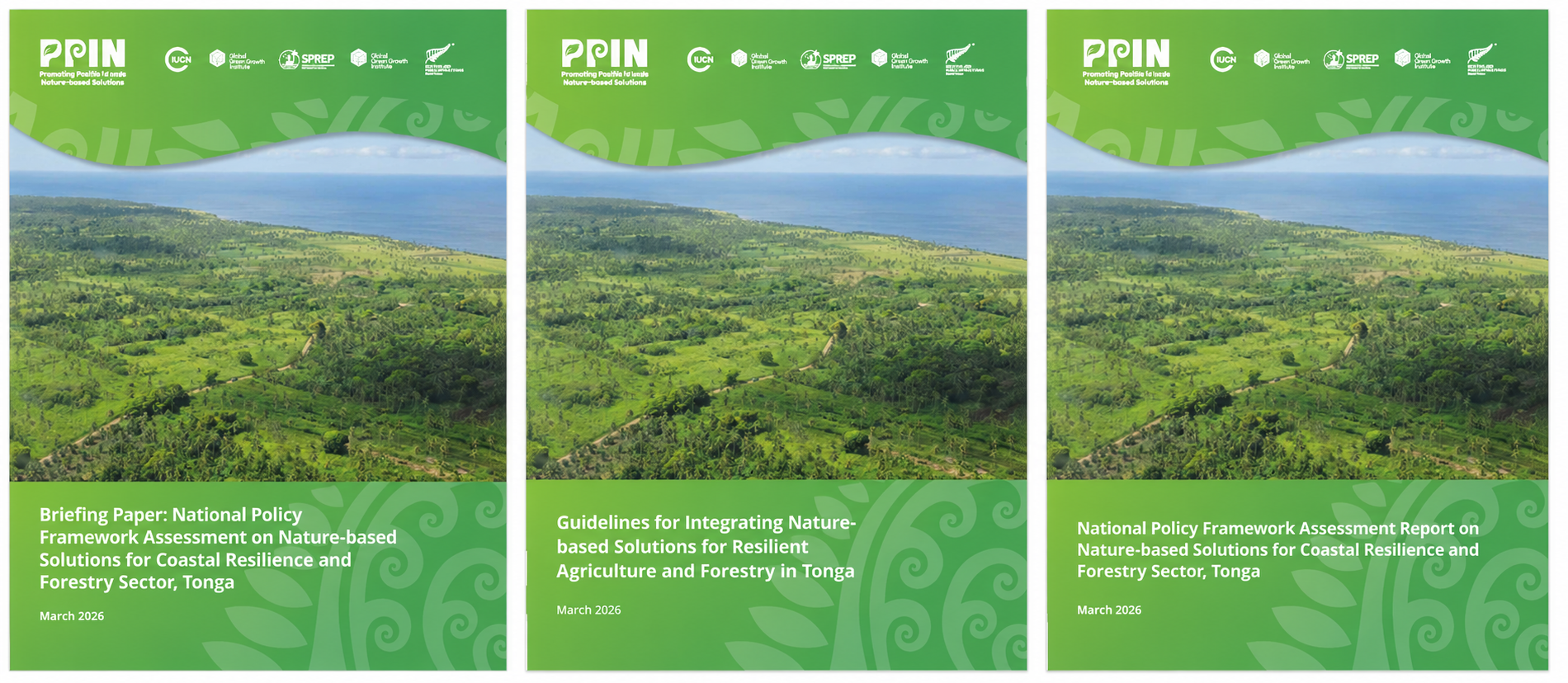
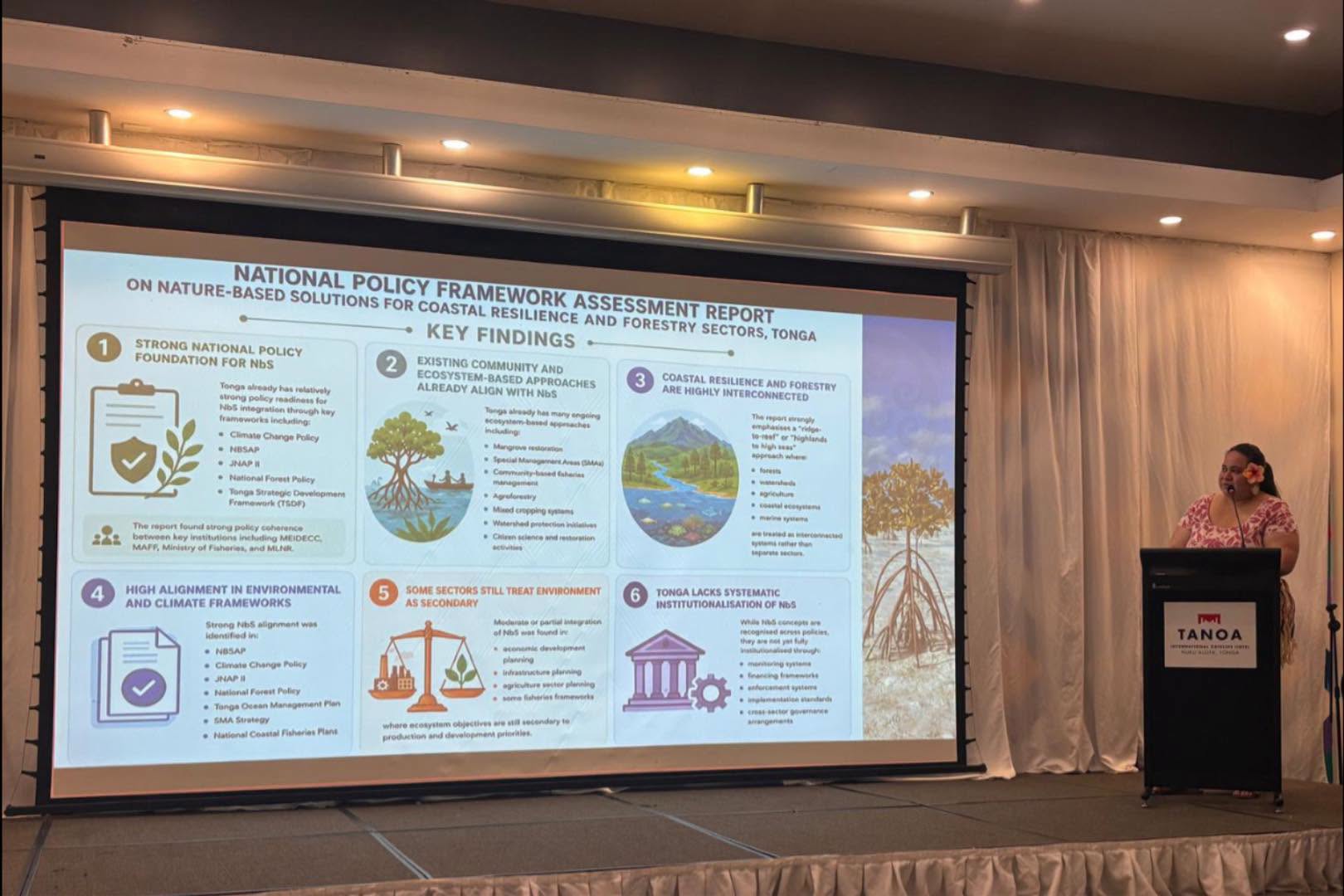
The three policy outputs are Guidelines for Integrating Nature-based Solutions for Resilient Agriculture and Forestry in Tonga, National Policy Framework Assessment Report on Nature-based Solutions for Coastal Resilience and Forestry Sectors Tonga, and the Policy Briefing Paper on Nature-based Solutions for Coastal Resilience and Forestry Sectors, Tonga.
Chief Executive Officer of the Ministry of Agriculture, Food and Forests, Mr ‘Elisaia Ika, highlighted the significance of the new policy tools for Tonga’s agriculture and forestry sectors.
“These outputs provide an important foundation for Tonga as we continue strengthening resilience across our agriculture, forestry, and coastal systems,” he said. “By bringing Nature-based Solutions into national planning, Tonga is better placed to protect the ecosystems that support our people, strengthen food security, and build resilience for communities across the country.”
Implemented by SPREP in partnership with IUCN, GGGI, and SPC under the Resilient Ecosystems for Climate Change Adaptation (RECCA) programme, the PPIN Project supports Pacific Island countries to strengthen the integration of Nature-based Solutions into national systems, policies, and planning processes.
The event, attended by government agencies, development partners, technical stakeholders, civil society organisations, and community representatives, reflected not only the completion of a technical process, but also the strength of collaboration and shared commitment across Tonga’s environment, climate, forestry, and agriculture sectors.
First Secretary of the New Zealand High Commission to Tonga, Ms Esther Shaw, acknowledged the importance of regional partnerships in supporting Pacific-led climate resilience solutions.
“We recognise the significant benefits of environment- and conservation-focused initiatives for Pacific ecosystems and community resilience,” she said. “Today's launch reflects that spirit of collaboration, leveraging SPREP's regional expertise while developing solutions that are firmly aligned with Tongan Government priorities and Tongan realities.”
Over the past two years, Tonga’s PPIN policy mainstreaming work has involved extensive stakeholder consultations, technical assessments, policy reviews, and collaborative discussions with national agencies and partners.
The process focused on identifying how Nature-based Solutions could be more effectively integrated into Tonga’s national and sector planning systems, particularly across agriculture, forestry, and coastal resilience sectors.
This work resulted in the development and official handover of the three important policy outputs. Together, these outputs provide both practical implementation guidance and strategic policy direction to support Tonga’s climate adaptation, biodiversity conservation, and sustainable development priorities.
SPREP Coastal and Marine Ecosystems Adviser, Ms Juney Ward, reiterated SPREP’s broader regional commitment to support Pacific countries in strengthening resilience through Nature-based Solutions.
“As the Pacific’s regional environment organisation, SPREP is committed to supporting our members to strengthen climate resilience, biodiversity conservation, and sustainable development through approaches that are grounded in both science and Pacific knowledge systems,” she said. “These policy outputs show how regional partnership and nationally led action can strengthen the integration of Nature-based Solutions into planning and support long-term resilience for Pacific communities and ecosystems.”
The NbS Guideline was developed to help strengthen the integration of ecosystem-based approaches into Tonga’s agriculture and forestry planning systems, while strengthening alignment between Tonga’s National Biodiversity Strategy and Action Plan (NBSAP), Joint National Adaptation Plan (JNAP), and Tonga Agriculture Sector Plan (TASP II).
As Tonga’s overarching national framework for biodiversity conservation and the promotion of Nature-based Solutions, the NBSAP provides the guiding foundation for strengthening how NbS priorities are integrated across sector planning and implementation. The guideline therefore provides practical recommendations for applying Nature-based Solutions in ways that support climate resilience, food security, sustainable land management, and community livelihoods across Tonga’s agriculture and forestry sectors.
Complementing this, the National Policy Framework Assessment reviewed Tonga’s policy and legislative landscape to identify where NbS principles are already reflected and where opportunities exist to strengthen alignment across national frameworks and institutions.
PPIN Project Coordinator, Ms Utulei Lui, extended SPREP’s appreciation to the Government of Tonga for its leadership and collaboration throughout the PPIN policy mainstreaming process, particularly the Ministry of Meteorology, Energy, Information, Disaster Management, Environment, Climate Change and Communications (MEIDECC) and the Department of Environment as SPREP’s national focal point, as well as the Ministry of Agriculture, Food and Forests (MAFF) as the key technical focal point for the implementation of the policy mainstreaming work in Tonga.
She also acknowledged the contributions of all government agencies, technical stakeholders, partners, civil society organisations, and community representatives who contributed to the consultations, assessments, validation processes, and development of the policy outputs launched during the event.
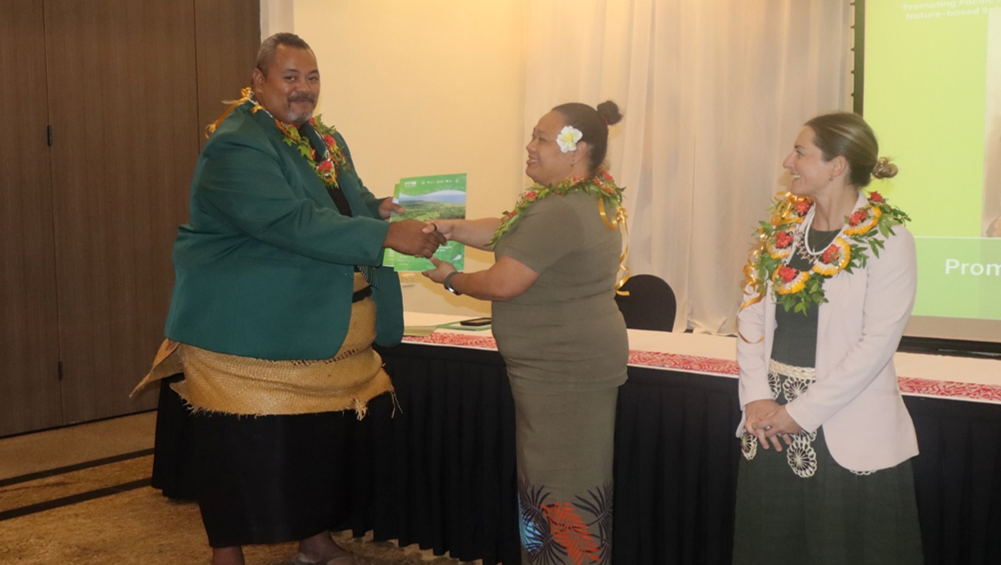
The event concluded with the formal handover of the policy outputs to the Government of Tonga, symbolising a shared commitment to continue strengthening the role of Nature-based Solutions within Tonga’s national planning and resilience-building efforts.
The Promoting Pacific Island Nature-based Solutions (PPIN) project is funded by New Zealand’s Ministry of Foreign Affairs and Trade (MFAT). PPIN seeks to support the development of policy and legislation for Nature-based Solutions (NbS), build regional awareness and capacity, and strengthen regional cooperation amongst Pacific Island countries on NbS. PPIN is managed by IUCN in partnership with the Pacific Community (SPC), the Secretariat of the Pacific Regional Environment Programme (SPREP) and Global Green Growth Institute (GGGI).