
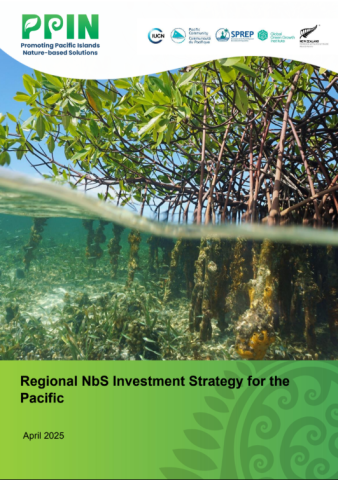
Overview
Pacific Island States (PICs) are particularly vulnerable to the impacts of climate change, including sea level rise and extreme weather events. The Pacific NbS Investment Strategy aims to scale up the impact and investment in NbS, funded by the New Zealand Ministry of Foreign Affairs and Trade (MFAT) through the PPIN project.
Challenges and Opportunities
Challenges: PICs face coastal erosion, food and water insecurity, and biodiversity degradation.
Solutions: NbS provide effective and sustainable ecosystem protection and restoration measures and are an alternative or complement to traditional "grey" infrastructure.
Priority Areas: Coastal management (mangrove and reef restoration), forestry (reforestation), and agriculture (agroforestry).
Implementation and Financing Roadmap
The 5-step roadmap includes: policy establishment, project identification/prioritization, financing, capacity building, and long-term sustainability.
Financing Sources: A shift is needed from reliance on grants to exploring alternative financing mechanisms such as carbon credits, payments for ecosystem services (PES), and private investment to ensure long-term sustainability.
Funders: Multilateral development finance institutions (MDBs) and international climate funds remain the most important donors.
Evaluation Results
Cost-benefit analysis (CBA) in Fiji, Tonga, and Vanuatu showed that 8 out of 9 NbS initiatives delivered positive net present value (NPV), demonstrating that these projects provided superior economic, social, and environmental benefits compared to conventional approaches.