
Overview of the Kiwa Initiative
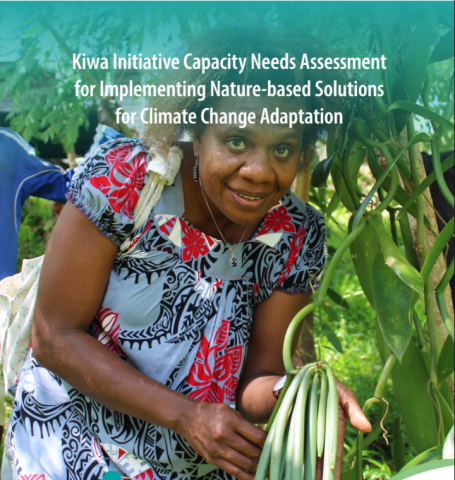
The Kiwa Initiative is a multi-donor program (including the EU, AFD, Canada, Australia, and New Zealand) aimed at strengthening the resilience of ecosystems, communities, and economies of Pacific Island Countries and Territories (PICTs) to climate change through Nature-Based Solutions (NbS). The initiative focuses on three challenges: implementing NbS for adaptation to climate change (CCA), enhancing access to climate finance, and integrating NbS into policies.
Challenges and Barriers
- Assessment results from consultations with 316 participants revealed the main barriers include:
- A shortage of skilled personnel and a high turnover rate.
- National policies often incorporate ecosystem elements but lack the resources for implementation and rarely utilize the term "NbS".
- Short project cycles (under 5 years) do not guarantee sustainability.
- Lack of integration of gender equality, disability, and social inclusion (GEDSI).
- Traditional governance systems and land ownership rights have not been adequately considered in project design.
Key Results and Recommendations
Formal education: The most sustainable approach, focusing on regionally recognized vocational qualifications (TVET).
Indigenous knowledge (LITK): Integrating NbS with traditional knowledge and practices to suit the local community context is necessary.
Training methods: Prioritize face-to-face training and the use of the "Train-of-Train" (ToT) model.
Proposed Activities
The report proposes a "menu" of 11 activities, in which the Kiwa Initiative should focus on activities 1, 3, 6, 7, 8, 9, and 11:
- Developing learning materials for schools and communities.
- Training of Trainers (ToT) programs.
- Raising awareness among decision-makers to integrate policy.
- Integrating NbS into vocational training programs (TVET) and short courses.