
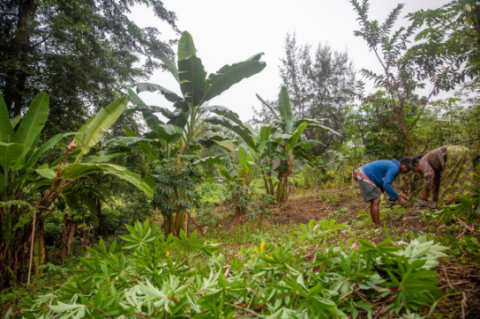
Project Overview: The "Climate Resilient by Nature" initiative (Australian Government in partnership with WWF) has collaborated with Caritas and Catholic Relief Services (CRS) to implement the TRACC project. The goal is to support Timor-Leste farmers in transitioning to agroforestry practices to build resilience to climate change.
Local Challenges: Agricultural communities in Timor-Leste are facing drought, flooding, and landslides. The overuse of traditional slash-and-burn farming methods (tesi ai no sunu rai) has led to land degradation, deforestation, and poor agricultural productivity.
Benefits of Agroforestry:
- Planting trees improves soil fertility, enhances soil moisture retention, and reduces erosion.
- Agroforestry promotes intercropping, helping farmers diversify their income and ensure food security instead of relying on a single crop.
- These activities contribute to ecosystem restoration and support biodiversity, attracting animals back to cultivated lands.
Connected with Tradition (Tara Bandu):
- Resource management is carried out through "Tara Bandu," a traditional customary law that helps protect the balance between the community and the environment.
- In Bualale village, the community has stopped burning farmland for the past three years. Now, they are working to formalize the Tara Bandu laws to prevent deforestation, minimize landslides and floods.
- Practical Results: Farmers have successfully adopted new techniques such as pruning, planting windbreaks and cover crops, helping crops grow better and generating income to support family life.
Download
Roots of resilience
(PDF, 1.82 MB)